
About Ahmed Mostafa Kamal

A Journey from Systems to People.

For more than two decades, my work has evolved through technology, government reform, career and life development, mental health, education, practitioner development and institution building.

Different fields, different roles and different stages—but one question has continued to guide the journey:

How can we better understand people, help them discover their potential, and support their development throughout life?
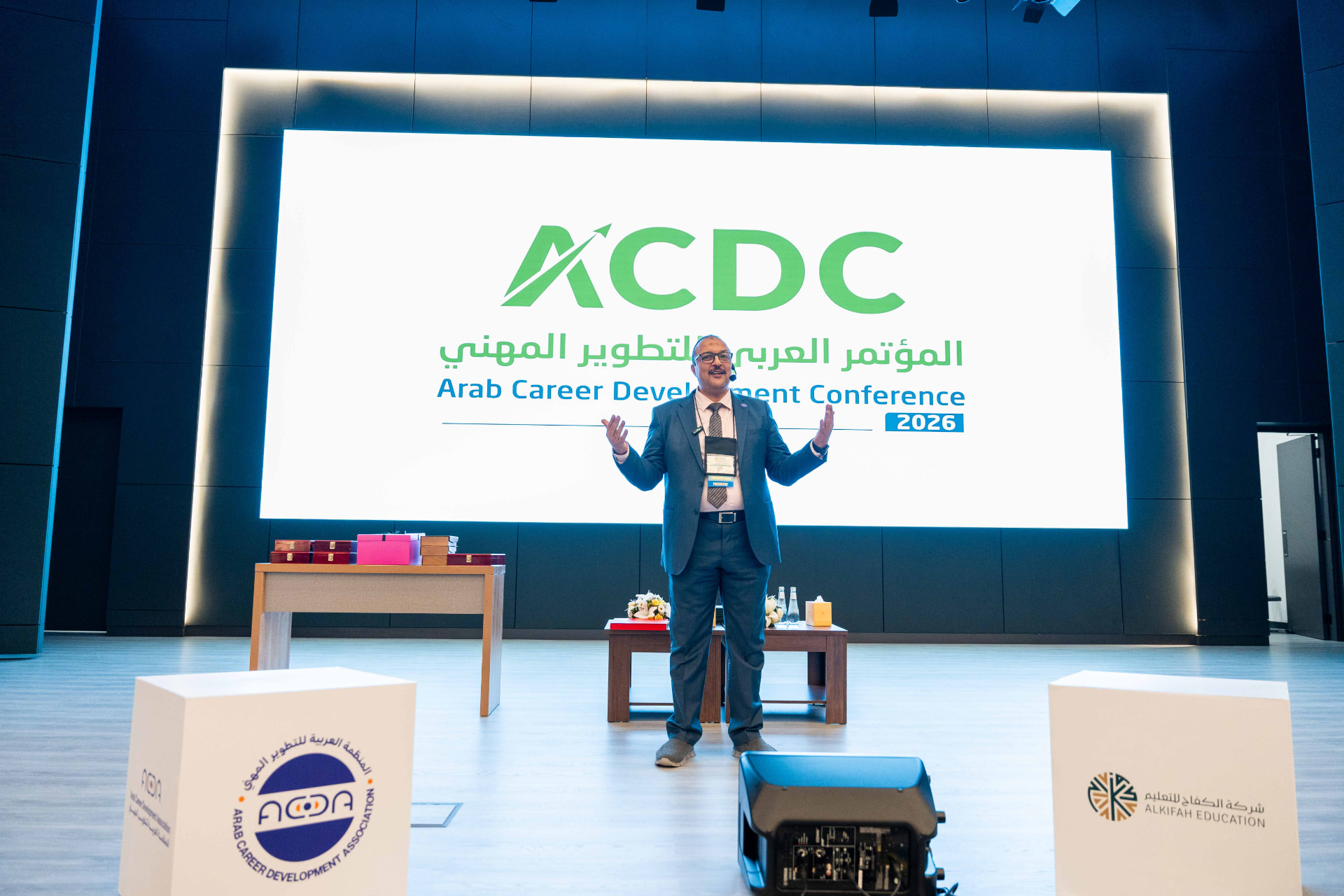
Ahmed Mostafa Kamal speaking on stage at the Arab Career Development Conference 2026

The Story Behind the Journey

It didn't begin with career development. It began with a question.

SystemsPeople

My professional journey started in technology and information systems. I was trained to think about systems—how they are designed, how they work, where the gaps are, and how they can be improved.

But while working in technology projects and later in government reform, I began to encounter a different kind of challenge.

It was not about technology.

It was about people.

As part of my work, I began mentoring young engineering graduates who had qualifications and technical knowledge, yet many still struggled to understand where they could contribute, which professional direction suited them, and how their individual capabilities could connect with opportunities in the labor market.

I began mentoring them in real working environments—observing how they approached problems, understanding their capabilities and personal characteristics, and helping them move toward roles that seemed better aligned with who they were and what they could become.

At the time, I wasn't calling this career development.

I was simply trying to answer a human question:

How do we help a person find the place where their abilities, identity, aspirations and opportunities can come together?

That question changed the direction of my professional life.

2007–2009 · A Turning Point

When Experience Needed a Framework

01Experience

By 2007, years of working with people had given me practical experience—but experience alone was no longer enough.

I became involved with a Career Development Office initiative serving engineering students at Cairo and Ain Shams Universities. The work focused heavily on preparing young people through skills development and training.

02Gap

But something didn't fit.

Training could develop skills. It could not, by itself, answer the deeper career questions.

  1. Who am I?
  2. Where am I going?
  3. What fits me?
  4. How do I make informed choices?
  5. How do education, work and life connect?

03Framework

I began examining the gap between what we were doing and what I believed a complete career-development process needed to provide.

That analysis changed my role—and changed my own learning journey.

I moved into operational leadership and began helping reshape the approach around a broader understanding of career development.

But it also forced me to confront another question:

If I wanted to help build the field differently, I needed more than experience. I needed knowledge, standards, methodology and a professional community.

So I started looking beyond Egypt.

2008–2009 · Looking Beyond Borders

Building International Bridges

Looking beyond Egypt was not about collecting international credentials. I was searching for knowledge, professional standards, tested methodologies—and people who had spent years developing the field.

That search began connecting me with international organizations and professionals who would significantly influence the next stages of my journey.

Mentorship

Richard Knowdell & Career Development Network

In April 2009, I began studying career-development coaching with Richard Knowdell through the Career Development Network.

What began as professional training gradually became something much more significant.

I found in Richard not only an experienced practitioner, but a mentor from whom I would continue learning and later working alongside for more than a decade.

Community & knowledge

NCDA

My dialogue with the National Career Development Association (NCDA) had begun earlier through the international work surrounding the Career Development Office.

Those conversations exposed me to a broader professional community and helped me explore how established career-development knowledge, standards and practitioner preparation could connect with the needs of our region.

Standards & credentialing

NBCC / CCE

My relationship with the National Board for Certified Counselors (NBCC) and the Center for Credentialing & Education (CCE) introduced another essential dimension:

Professional standards and credentialing.

The question was no longer only:
How do we develop better career services?
It was also:
How do we prepare qualified practitioners and build professional standards that people and institutions can trust?

But the vision was becoming regional

At the same time, conversations were beginning with professionals and stakeholders across several Arab countries.

Different countries. Different educational and employment environments. Different challenges.

Yet many of the underlying questions were remarkably similar.

By 2009, my thinking had started moving beyond developing individual programs.

A larger question was emerging:

Could we build a professional career-development ecosystem that serves the realities of the Arab region while remaining connected to international knowledge and standards?

That question would take years to answer.

But in 2009, the journey toward that vision had already begun.

2009–2012 · Turning knowledge into practice

From Learning to Building

LearningBuilding

By 2009, the question was no longer simply where I could learn.

A more demanding question had emerged:

How could that knowledge be translated into practitioners, programs and professional capacity that made sense within our own context?

The next stage of my journey became less about what I could learn for myself—and increasingly about what we could build for others.

01People

Building Practitioners

Knowledge becomes more valuable when it can be transferred.

In 2009, UNICEF invited me to support the development of the Career Guidance component of MESHwARY, alongside its Skills Development work.

The challenge was not simply to deliver career services to young people. We needed people who could deliver them.

In September 2009, I began training an initial group of practitioners, bringing career-development knowledge into Arabic and working to make the concepts understandable and applicable within the realities they were facing.

This became the beginning of a much longer commitment to practitioner development.

As the work expanded through youth organizations and later the Ministry of Youth, so did the need for more practitioners, stronger learning materials, continued mentoring and a more contextualized approach.

The objective was no longer to deliver the work myself. It was to develop people who could carry the work forward.

02Practice

Building Professional Capacity

International knowledge had to become locally meaningful.

My own professional development continued in parallel.

The GCDF pathway, my growing relationship with NCDA and NBCC/CCE, and my work with Richard Knowdell were giving me access to established frameworks, methodologies and professional standards.

But I increasingly understood that bringing international knowledge into the region could not mean simply copying it.

It had to be:

  1. understood
  2. contextualized
  3. practiced
  4. refined
  5. transferred

In 2010, I brought Richard Knowdell to Egypt to deliver a coaching program, extending a relationship that had begun as professional learning into deeper collaboration.

At the same time, I continued developing my own capacity not only as a practitioner, but increasingly as someone preparing other practitioners.

How do we remain connected to international standards while building practice that genuinely understands our language, culture, education systems and labor markets?

That question would continue shaping much of my work in the years that followed.

03Institutions

Building Institutions

Sustainable change needs more than individual practitioners.

The regional vision that had begun forming in 2009 also revealed another challenge.

Programs could end. Projects could lose funding. Individuals could move on.

If the field was going to grow sustainably, it needed professional structures that could survive beyond any single program or person.

The early idea of a regional career-development consortium led to ACDAMENA.org and, when a regional structure proved difficult to establish at the time, to the development of Al Namaa as an organizational vehicle in Egypt.

  1. ACDAMENA.org
  2. Al Namaa
  3. AM Foundation

These were early attempts to create a professional home for a field that was still developing in the region.

The journey was not straightforward.

Different organizational models were tried, lessons were learned, and the search for a sustainable structure continued.

By 2012, that journey contributed to the establishment of AM Foundation with a group of co-founders in Egypt.

The organizations changed.

The mission did not.

04Context

A fourth question was also emerging...

While working with practitioners in different settings, another gap became increasingly clear.

School counselors worked in a very different environment.

Children and adolescents were not simply younger versions of adult career clients. Their development was shaped by families, teachers, schools, education systems, culture and different stages of growth.

So in 2010, I began developing a different model for career development within the K–12 environment.

By 2011, that concept was taking a more defined form.

It would take many more years of development, testing and refinement before becoming the program it is today.

Context matters. A professional model becomes meaningful only when it understands the people and the environment it is designed to serve.

2012–2016 · Turning practice into models

From Practice to Models

  1. Idea
  2. Model
  3. Experience
  4. Application

As the work expanded, another lesson became increasingly clear:

A good professional framework was not enough. It had to become something people could actually experience, practice and use.

Years of working with young people and practitioners were revealing recurring needs—but those needs were not always served by conventional training.

So I began moving from delivering activities and adapting existing knowledge toward developing more structured models, learning experiences and practical tools.

How do we turn professional knowledge into experiences that can change the way people understand themselves, make decisions and move forward?

01

Knowledge

From Knowledge to Practical Tools

Training practitioners created a growing need for Arabic learning materials that could support practice beyond the training room.

As the work expanded, I continued developing and contextualizing materials around career development and Career Guidance, bringing together professional knowledge, practical activities and lessons emerging from work in the field.

Around 2012–2013, this work developed into a more structured career-development manual designed to support practitioners in their work.

Knowledge should not remain in a presentation. It should become something people can use.

02

Experience

Career Week: Learning Through Experience

Working with young people also showed me that career development could not always be taught effectively through conventional workshops.

Young people needed opportunities to explore, interact, experiment, reflect and make decisions.

That thinking led to the early development of the Career Week Program as an intensive youth experience.

It began as a shorter three-day camp and continued evolving through repeated delivery and learning from participants.

In November 2014, the first season of a five-day model began.

By September 2015, a new seven-day version was introduced, adding broader activities and an entrepreneurship dimension. That season continued through May 2016.

Development is not something we simply explain to people. Sometimes, we have to create an environment where they can experience it.

03

Decisions

Career Guidance for Young People

At the same time, another need was becoming clear.

Not every young person needed to become a career-development practitioner.

Many simply needed a structured way to better understand themselves, explore their options and make more informed decisions about education, work and their future.

In 2015, I developed the Career Guidance Program as a more focused pathway for young people, particularly university students and fresh graduates.

The program was designed to make career-development concepts accessible and practical for people making important career decisions.

The program was later approved by the Center for Credentialing & Education (CCE) for 25 hours.

Preparing practitionersSupporting beneficiaries

Preparing practitioners and supporting beneficiaries are connected—but they are not the same thing.

04

Context

One Model Does Not Fit Everyone

The K–12 work that had begun in 2010 continued developing in parallel.

It reinforced a principle that was becoming central to everything I was building:

Different people, life stages and environments require different approaches.

  • A school counselor does not work in the same environment as a career practitioner serving adults.
  • A university student making an early career decision does not have the same needs as an experienced professional navigating a transition.
  • And a young person does not learn simply because information has been presented.

Context was no longer an adjustment made after designing a program.

Context was becoming part of the design itself.

Today · An integrated view of human development

Where the Journey Leads Today

Over time, the different parts of the journey began to connect.

  • Technology taught me to think in systems.
  • Working with people taught me that systems alone are never enough.
  • Career development revealed the importance of identity, choices and transitions.
  • Education showed how strongly development is shaped by environment and life stage.
  • Work with practitioners reinforced the importance of professional standards, context and the ability to transfer knowledge.

And the journey continued to expand.

Human beings do not experience career, education, wellbeing, relationships, work and life as separate systems.

They experience them as one life.

That understanding increasingly shaped the way I see my work today:

Human Development Across the Lifespan

Supporting people, practitioners, organizations and communities through the different stages, transitions and environments of life.

  • 01Human Development

    Understanding development across the different stages and contexts of life.

  • 02Career & Life Development

    Supporting identity, direction, decisions, transitions and meaningful participation in work and life.

  • 03Mental Health & Wellbeing

    Recognizing the relationship between psychological wellbeing, development, choices, performance and quality of life.

  • 04Education & Learning

    Creating learning experiences that respond to people, context and different stages of development.

  • 05Practitioner Development

    Preparing professionals who can translate knowledge into ethical, contextualized and effective practice.

  • 06Organizations & Communities

    Building environments, systems and initiatives that enable people and communities to develop.

The journey is still evolving.

What began with systems, moved toward people, developed through practice, and expanded through international learning has become a broader commitment:

to understanding human development across the different stages, transitions and environments of life.

We organize around the human journey—not around jobs.

  • Explore Human Development· Coming soon
  • Explore Programs· Coming soon
  • Connect with Me· Coming soon